AT&T Copper Landline Changes May Begin November 15 in 42 Georgia Communities
AT&T can begin discontinuing copper-based landline service in 42 Georgia communities on or after November 15. Here's what customers should check.
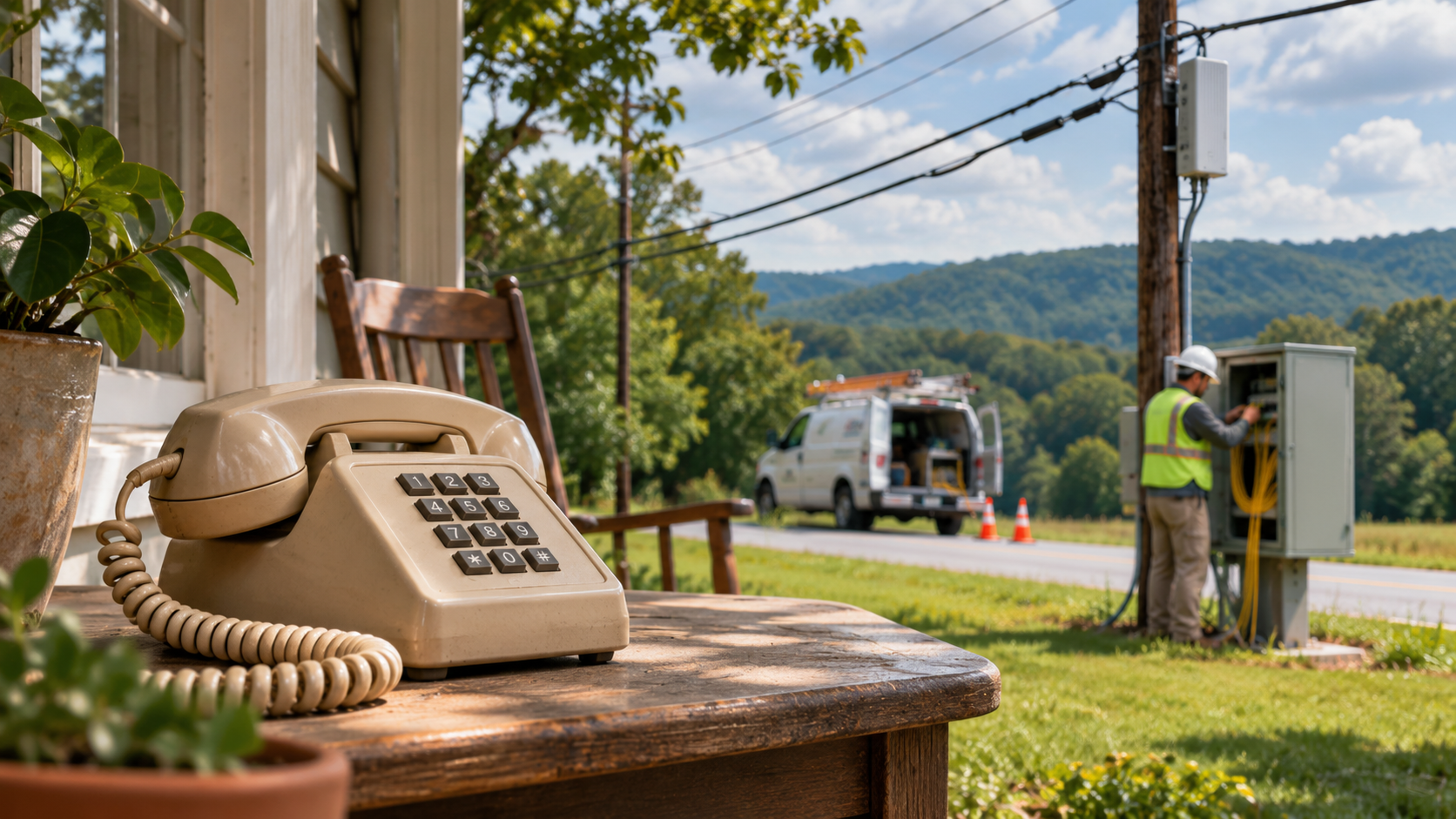
ATLANTA, Ga. — AT&T may begin discontinuing traditional copper-based telephone services in parts of Georgia on or after November 15, 2026, according to a November 3 report from Georgia Public Broadcasting. The report identifies 42 Georgia communities in the affected group, but the date does not mean every household in those places will lose phone service that day.
Which parts of Georgia are mentioned?
Georgia Public Broadcasting identified Tybee Island, Dublin and Americus among the service areas covered by the upcoming copper-line transition. These are examples, not a complete list of the 42 communities.
A community's inclusion does not establish that every home or business there uses the retiring equipment. Whether a particular line is affected depends on its provider, service type and network facilities. Residents should check notices and account-specific information rather than relying only on a statewide headline.
What changes November 15 — and what does not
The November 15 date is the earliest permitted discontinuance date reported for the relevant services. It is not a claim that AT&T will disconnect all copper landlines throughout Georgia simultaneously. The change involves legacy copper service, not every telephone service or internet connection.
The transition follows a broader national effort by AT&T to move customers away from aging copper infrastructure. In its own 2026 statements, the company has pointed to newer options such as fiber, wireless connections and AT&T Phone – Advanced.
How customers are supposed to hear about it
AT&T says it contacts affected customers multiple times during its transition process through letters, emails, text messages and calls, and provides a date for the individual service change. The carrier says it is working to preserve access to phone and 911 service through replacement options.
Those are AT&T's representations about its transition plan. They do not replace a household or business checking whether its own installation, equipment and location are ready. Anyone receiving a service-change notice should confirm the account details through an official AT&T channel.
Don't forget devices connected to an old phone line
For some Georgians, the legacy line is connected to more than a handset. Home security panels, medical-alert devices, older fax systems, elevator communications or business alarm equipment may use telephone connectivity. Compatibility cannot be assumed simply because a replacement service carries voice calls.
Before changing service, identify which devices depend on the old line. Ask each equipment vendor or monitoring company how the new connection should be configured and tested. Businesses with several locations should review each service line separately; a working desk phone does not prove that every connected device will work.
Emergency access and power-outage planning
AT&T has said that its customers should not be left without access to calling or 911. Nevertheless, customers should verify the exact emergency-call arrangements of the replacement product before disconnecting an old line. Ask how power outages are handled and whether backup power is needed or included.
If someone in the household relies on a monitoring device, complete a live test with the service provider or monitoring company after a transition. Avoid waiting until the day of a scheduled disconnection to identify those dependencies.
A practical checklist for Georgia residents
Review mailed and electronic notices from AT&T; verify which number or services are affected; compare the replacement options available at your specific address; confirm ongoing pricing and any equipment charges; and test medical, security, fax or business systems with the appropriate providers.
If a third party demands immediate payment in response to a rumored statewide cutoff, independently verify the notice with the phone company. The published November 15 date is a reason to check your own account status, not proof that all Georgia copper service will disappear at once.
The Georgia inside the story
A change to a longstanding telephone network is also a Georgia community story. The consequences can look different in a Tybee Island residence, a Dublin small business and an Americus household with a medical alert. Clear notice and careful replacement testing matter more than the misleading idea of one giant statewide switch-off.